When is a glaze defect not a defect?
Anyone who has tried pottery will know that glazing can appear to be something of a dark art. There are many things that can go wrong and there are some standard ways in which glazes go wrong, commonly referred to as glaze defects or flaws. There are many types of glaze defects. Here are a few examples, along with what causes them and how you can fix them. Then below we’ll discuss what being flawed actually means and why my work often has patches of bare clay!
Glaze defects:
- Crazing – tiny cracks across the glaze. This is a glaze fit issue, so the glaze and clay essentially don’t work well together. The glaze is shrinking more than the clay and pulling apart. To fix it you’d want to swap your glaze or your clay, or edit your glaze recipe.
- Crawling – the glaze peels off during firing and leaves bare patches. Essentially the glaze is not sticking well to the surface of the clay and goes for a wander! Often caused by too thick glaze application or adding layers before the one below is dry.
- Pinholing – tiny craters in the finished surface. Often caused by gases escaping the clay body so is often more present on darker clays which have more impurities. It’s usually easily solved by slower cooling after firing, a longer hold at top bisque temperature or a drop and hold from top glaze temperature.
- Shivering – the glaze splinters off once cooled. This is a glaze fit issue, the clay shrinks more than the glaze once it’s been fired, so cracks and detaches to relieve pressure. To fix this one you need to edit your glaze recipe or try it with a different clay.
These glaze behaviours are all traditionally referred to as defects. They are disruption of the uniform smooth surface of a glaze. But what if you don’t want a uniform smooth surface? I would argue that these defects can be used to add interest and texture to ceramics. (With the exception of shivering, which can potentially release sharp shards of glaze during the lifetime of the pot! Although even that could be an interesting art installation, do let me know if you do this!)
So, in this article I’m not teaching you how to fix the flaws, I’m actually suggesting you have a go experimenting with them. But why?
For much of the 19th and 20th century, we were focused on repeatability and perfection. Making things flawless and in bulk. We wanted T-shirts that all looked the same, a dinner set with identical motifs, a kettle that matched our toaster. It was an era of industrialisation that turned into mass production and mass consumerism. As humans too, In my experience, we aimed for perfection, or the appearance of it. We acted like everything was fine. In a sweeping generalisation, I will suggest that children raised in the 20th century often struggle with not being perfect. We didn’t want to make mistakes or admit to our errors.
The 21st Century however is moving away from this perfection. Maybe we are bored of it, or maybe we realise that it’s not as great as we hoped. We are now in the era of acknowledging our flaws, sitting with uncomfortable feelings, embracing our struggles and recognising how much they enrich us. Now we are more open to exploring imperfection.
Studio pottery in the 20th century was already starting to push back against mass production and many influential potters favoured rustic styles. There’s a great introduction to studio pottery here. Generally, post industrial revolution, the crafts were making a comeback. In the 21st century I feel this is even more pronounced. Potters and other craftspeople are more interested in exploring imperfection in their work. Handmade items are loved more now because they look and feel handmade. This doesn’t mean they are not made with skill, just that maybe further from ‘perfect’ is more acceptable and even more desirable.
This is where glaze defects come in. Potters are experimenting with texture more and stepping away from the idea of a perfect even coat of glaze. I love this for pottery.
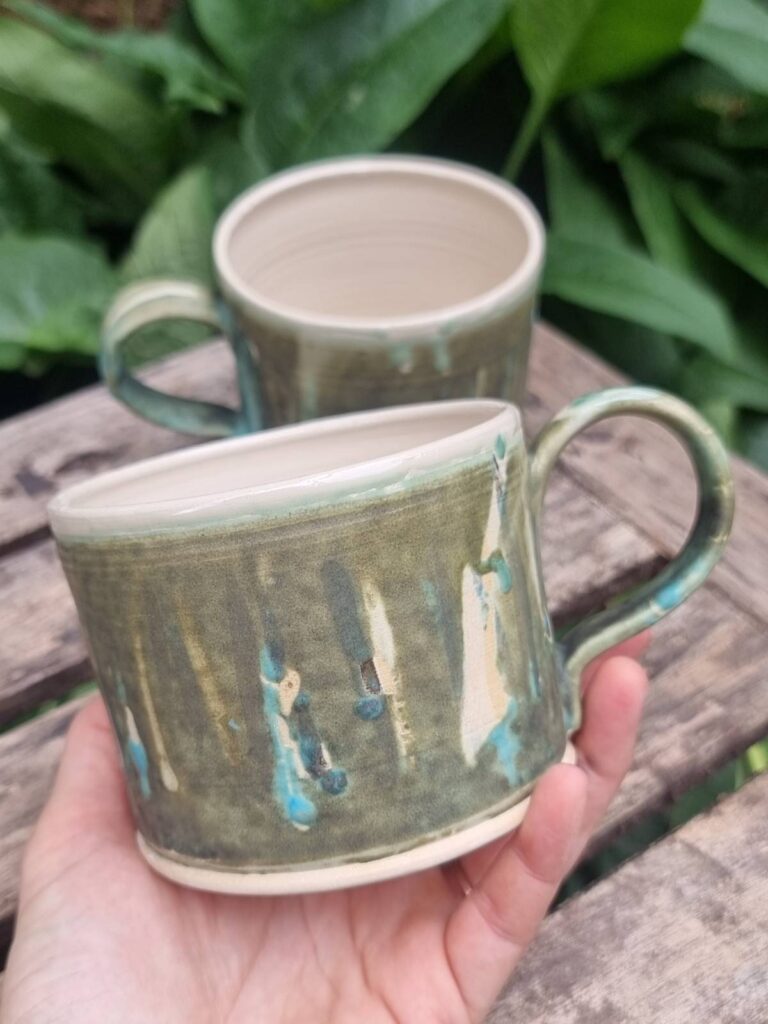
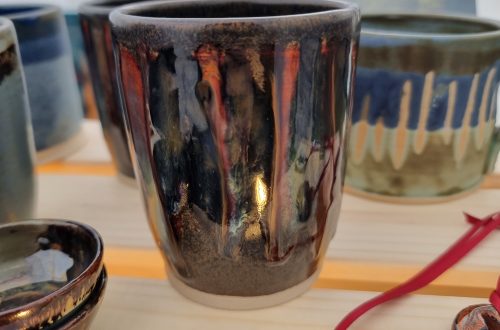
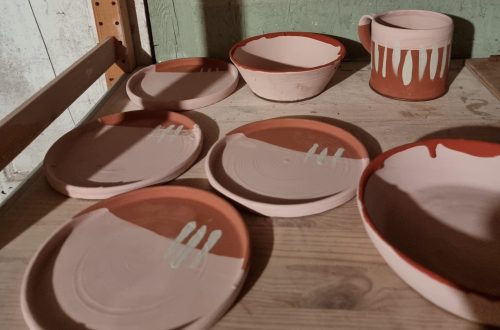
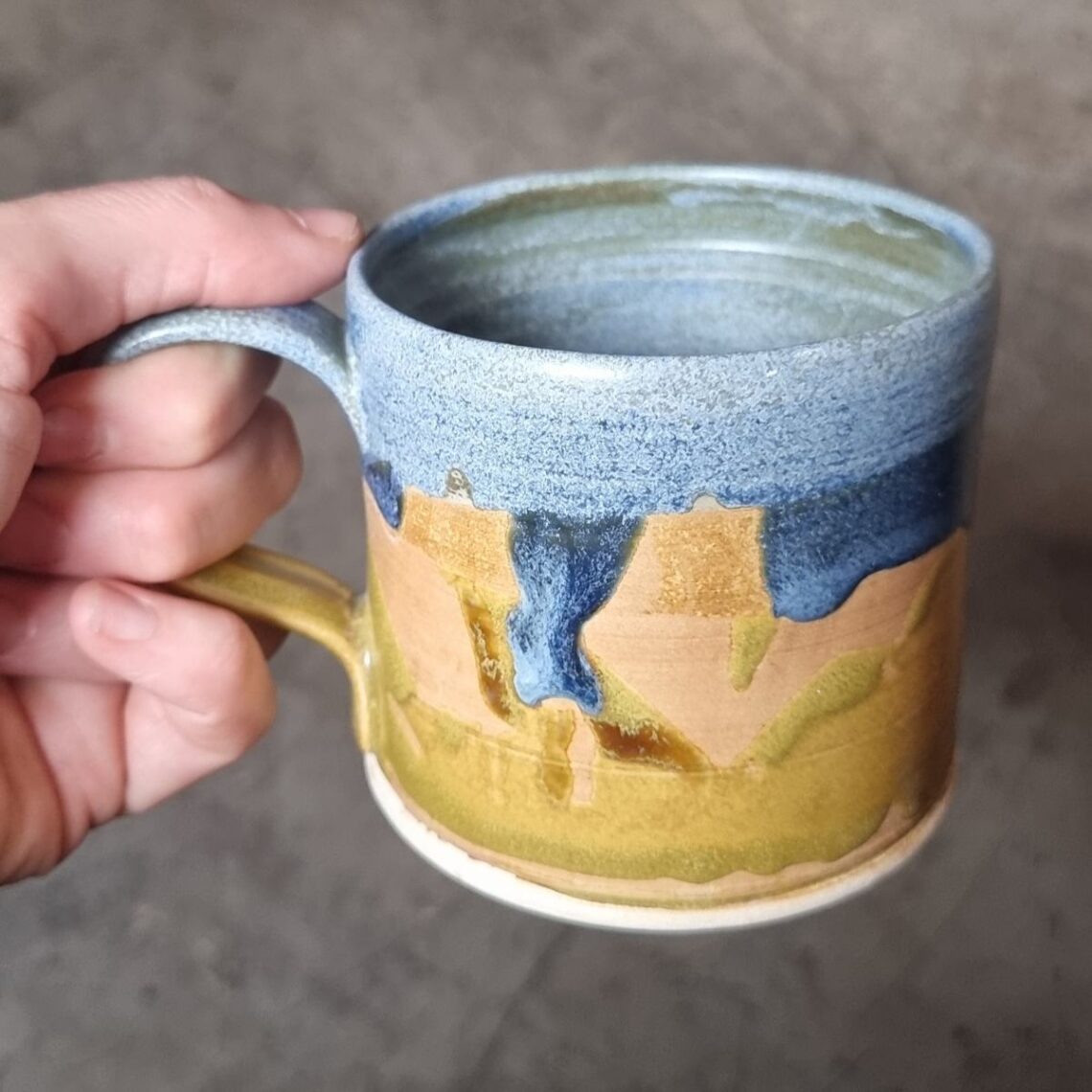
In my work, I try to purposefully embrace unpredictability and, if it’s not too much of an oxymoron, harness the unpredictability! I enjoy getting my glazes to crawl, much of my work has little areas of blank clay, either created using wax resist to give the impression of crawling, or by applying glazes thickly on damp greenware to get some actual movement. Often both. For me it’s part of letting go and accepting what will be, will be. I can have a vision and an aim but at some point it’s wonderful to throw all the leaves in the air and watch where the wind takes them. I think that we can use interesting characteristics of the ‘glaze defects’ to add depth to our creations.
Embracing glaze defects isn’t a new thing, it just hasn’t really been in fashion for a while! In ancient China in the Song Dynasty, potters used crazing as decoration. A network of fine, beautiful cracks And in Japan, Shino ware, around since the 16th century, uses a thick milky white glaze that crawls, blisters and pinholes as the glaze desires!
Now I do think it’s important to be able to fix glaze issues you are having and to consider when and where to play with these techniques. Embracing and using ‘flaws’ doesn’t mean just making a mess and in this modern age, food hygiene is a thing. Sometimes you do want a nice smooth gloss surface – on the inside of a functional mugs for example, where most would agree it’s best to have a smooth easily washable surface that doesn’t stain. But in learning the solutions you also know how to create the defects on demand!
It’s pretty easy to make these defects occur but to make it even easier, You can now even buy specific commercial glazes designed to craze or crawl. Amaco recently released a whole range of crawl glazes to ‘encourage spontaneity’.
There’s something beautiful and freeing about not knowing exactly what will come out of the kiln. Pottery is always an exercise in letting go. The question is, how far is the potter comfortable pushing that?
So, when is a glaze flaw not a flaw? I’d say, when you are making it happen on purpose. Or maybe more accurately, you are seeing if it will happen with open minded intent!